How to Repair a Large Truck Tire Puncture Safely
Large truck tires, particularly those of the radial construction commonly used on heavy commercial vehicles, operate under significantly higher loads and pressures than passenger car tires. A puncture in such a tire requires a careful, methodical approach to restore its integrity without compromising safety. The process of plugging a radial truck tire is not interchangeable with the quick fixes sometimes applied to smaller tires. Understanding the distinctions between tire types, the limitations of plug repairs, and the conditions under which replacement is the only viable option is essential for anyone involved in fleet maintenance or roadside assistance.
This article describes a general framework for assessing and addressing punctures in radial truck tires. It outlines the typical tools involved, the sequence of steps that technicians often follow, and the factors that determine whether a repair is appropriate or whether a tire should be taken out of service. The information presented here is intended for educational purposes and does not replace the judgment of a qualified tire service professional. Specific procedures may vary based on tire manufacturer guidelines, local regulations, and the particular circumstances of each puncture.
Understanding Radial Truck Tire Construction and Puncture Types
Radial truck tires are built with multiple layers of steel belts and a robust sidewall to endure highway speeds and heavy payloads. The tread area, where most punctures occur, is reinforced with these steel belts. A puncture that penetrates the tread can often be repaired if it is within the repairable zone—typically the tread’s center three-quarters and away from the shoulder. The size of the puncture is also a critical factor; most industry guidelines consider holes up to about one-quarter inch (6 mm) in diameter as candidates for plug repair, provided no damage to the belts or inner liner has occurred.
Punctures that are located in the sidewall, shoulder, or within one inch of the edge of the tread are not considered repairable by plugging alone. In such cases, the structural integrity of the tire is compromised in a way that a simple plug cannot restore. Additionally, multiple punctures that are too close together, or a single puncture that has caused separation of the rubber layers, typically call for replacement. Understanding these boundaries is the first step in deciding whether to proceed with a repair or to recommend a new tire.
Essential Tools and Materials for Safe Repair
A standard tire plug repair kit for large truck tires typically includes several items. A reamer or rasp tool is used to clean and enlarge the puncture channel so that the plug adheres properly. A plug insertion tool, often with a barbed or notched tip, allows the plug to be pulled through the hole from the outside. Rubber plugs, usually made of a self-vulcanizing material, come in various sizes to match the puncture diameter. Rubber cement or vulcanizing fluid is applied to both the plug and the hole to create a chemical bond. Other useful items include a valve core remover, a tire pressure gauge, and a compressor or air source for reinflation.
Personal protective equipment is also part of the process. Gloves protect hands from the sharp edges of punctures and from the chemicals in the cement. Safety glasses help prevent debris from entering the eyes during reaming and insertion. In a workshop setting, a tire cage or inflation safety device is strongly advised when inflating large truck tires, as the sudden release of air or a blowout can cause serious injury. Having these tools and safety measures in place before beginning the repair contributes to a more controlled and predictable outcome.
Step-by-Step Procedure for Plugging a Radial Tire Puncture
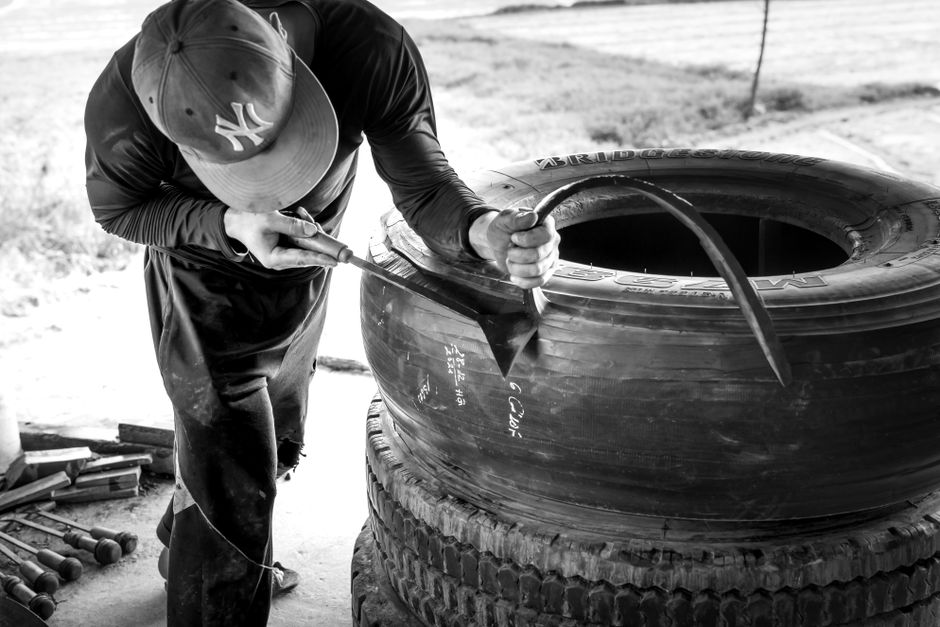
The first step in any repair is to fully deflate the tire. Attempting to remove a foreign object from an inflated large truck tire can be extremely hazardous due to the high pressure. Once deflated, the technician can safely extract the puncturing object—such as a nail, bolt, or piece of metal—using pliers. The next step involves cleaning the puncture channel with a reamer. This tool is inserted and rotated several times to remove debris and roughen the inner surfaces so that the plug can bond effectively.
After reaming, a small amount of rubber cement is applied to the tip of the plug and into the hole. The plug is then loaded onto the insertion tool and pushed through the puncture from the outside until approximately half an inch of the plug protrudes inside the tire. Some procedures recommend that the plug is then pulled back slightly to ensure the inner portion expands against the liner. The insertion tool is withdrawn, and the excess plug material on the outside is trimmed flush with the tread surface using a knife or scissors. The tire is then inflated to the recommended pressure, and a soapy water solution is sprayed over the repair area to check for any leakage. If no bubbles appear, the repair is considered complete. It is important to note that this method is often regarded as a temporary repair by many industry standards, and a combination plug-patch applied from the inside after removing the tire from the rim is typically preferred for a longer-term solution.
When Replacement Is Necessary Instead of Repair
Certain puncture characteristics and tire conditions eliminate the possibility of a safe plug repair. As mentioned earlier, any puncture in the sidewall, shoulder, or within one inch of the tread edge generally requires replacement. Punctures larger than the size limit specified by the tire manufacturer—often around a quarter inch for radial truck tires—are also not suitable for plugging. Additionally, if the puncture has caused visible bulging, separation of the tread or sidewall, or if the inner liner is damaged, replacement is usually indicated.
Multiple punctures in close proximity can weaken the overall structure of the tire’s belt package. Tire age is another factor; a tire that is more than six years old, even if the puncture is repairable, may be replaced as a precaution because rubber degradation can affect the bond of the plug. Finally, any sign of run-flat damage, such as rubber dust inside the tire or excessive heat buildup, typically means the tire should be discarded. Technicians often refer to guidelines from the Rubber Manufacturers Association (RMA) or the tire’s own service manual to make these determinations. In all cases, if there is doubt about the repairability of a tire, consulting a professional tire service is the recommended course of action.
Safety Considerations and Best Practices
Working with large truck tires carries inherent risks, even after deflation. The weight of the tire and wheel assembly requires proper handling equipment, such as a hydraulic jack or a tire dolly, to prevent strain or injury. When the tire is mounted on a vehicle, wheel chocks should be placed on the opposite axles to prevent unintended movement. Inflation must be performed with the tire in a safety cage or behind a barrier, especially when using compressed air from a truck-mounted compressor. Overinflation can occur quickly, so frequent pressure checks with a calibrated gauge are advisable.
Best practices also include recording the repair details, such as the puncture location, size, and type of plug used, for future reference. Regular inspection of all tires for signs of wear, cuts, or embedded objects can help identify issues before they lead to punctures or blowouts. While plugging a puncture can restore a tire to service, it does not restore it to its original condition; the tire’s speed and load ratings may be affected, and periodic re-inspection is recommended. Ultimately, the decision to repair or replace a large truck tire should be based on a thorough assessment of the specific damage and an understanding of the limitations inherent in any plug repair method.